A digital-first strategy is key to closing the knowledge gap

Baby Boomer retirement is the biggest “brain drain” America has ever witnessed. The year 2011 began a two-decade period during which no fewer than 10,000 Boomers reach retirement age every single day[1]. In established industries, many retirees are walking out the door with 30+ years’ experience.

Think about it this way:
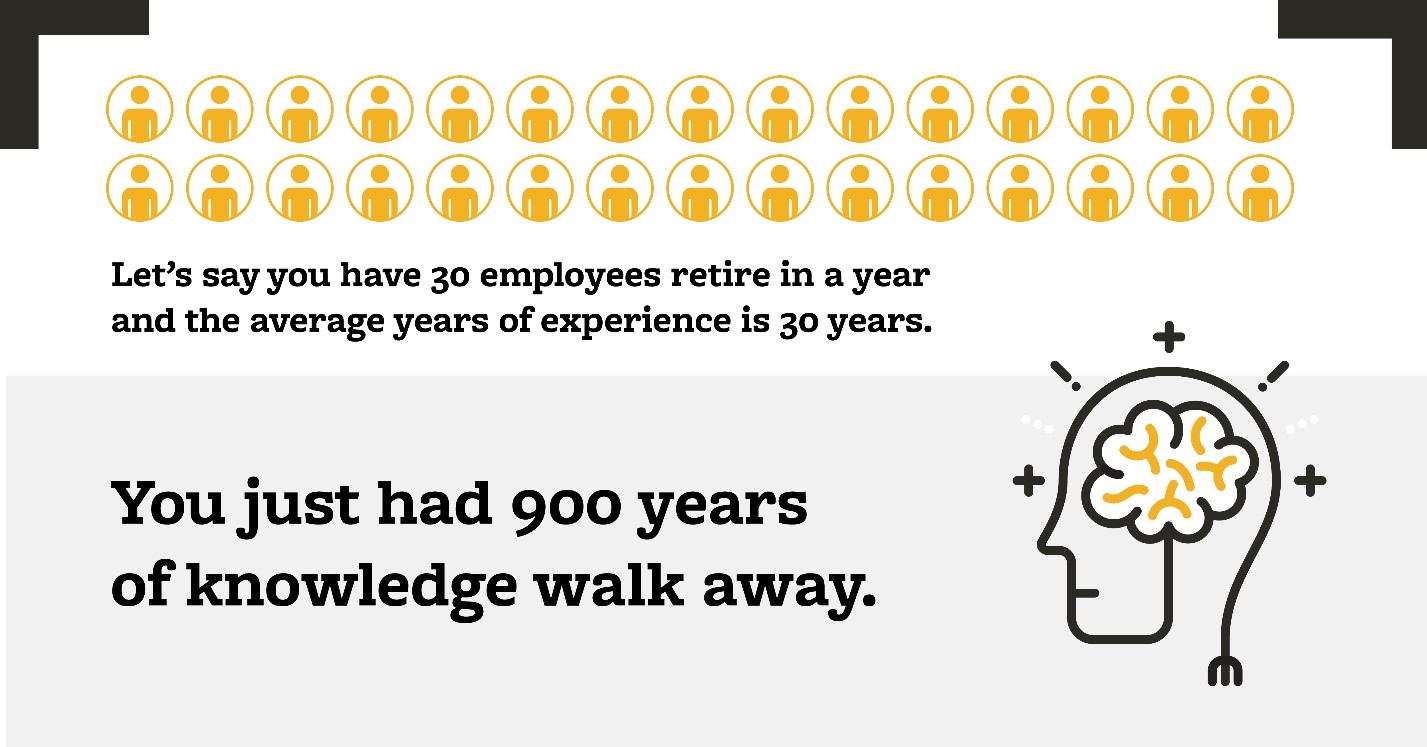
That’s hard to lose and even harder to replace. In a survey of manufacturing HR professionals, 34% said this would be a real problem, and 11% said it would be a crisis by 2025[2].

The risks of an inefficient workforce.

A poorly trained workforce could be putting themselves and your assets at risk. Ineffective knowledge sharing also endangers team morale and productivity, with the average employee spending over five hours per week seeking or waiting for assistance or information from coworkers, eventually recreating existing work or being delayed in their progress. Additional findings show that 66% of these unshared knowledge delays will last up to one week, and 12% last a month or more[3].

The benefits of a systemic approach to knowledge sharing.

It is not enough to rely on standard training protocols to teach employees how to do their jobs. Today’s managers must put tools in place to encourage and facilitate the transfer of knowledge gained through years of on-the-job experience.

A core principle of the SAIM smart fuels management platform is digitally documenting and communicating critical information. This ensures a smooth knowledge transfer and uninterrupted fuel facility operations.

The SAIM platform enables managers to retain written, video and other training documentation so the next generation of users and operators can gain competencies and experience success in their roles.

  • Using reverse engineering through laser scan data, training manuals come to life with virtual simulations within a tank farm 3D model.
  • Easy-to-use maintenance and operations digital checklists, alerts, and reminders keep new facility operators and managers on top of scheduled tasks and ongoing reports or inspections.
  • Real-time signals help team members track important metrics and provide a centralized source of information to communicate with managers, engineers, and vendors.
Millennials are now the largest generation in the U.S. labor force[4]. They demand digital technologies to do their jobs well and expect workplace learning that uses apps, videos, gamification and virtual reality. They’ve grown up with information at their fingertips and are comfortable sharing what they’ve learned through digital platforms.

Our experienced team members and leaders come from environments where “knowledge is power,” but in today’s workplace the power lies in knowledge sharing. Companies who want to actively capture retiring knowledge and create a modern workforce need to transfer it in a way that will translate into the kind of digital learning and workplace environment the next generation expects.

Ready to transform your knowledge sharing strategies? Schedule a SAIM demo with one of our experts today.

Take the SAIM Facility Assessment to determine the current status of your organization’s digital transformation

Latest Articles

Snapshot: SAIM Intern Kolbe McLenon Explores Aviation Technology in Action

Meet Kolbe McLenon, SAIM’s Client Success Intern, and learn how his interest in aviation and technology is connecting with fuel operations.

SAIM Connect 2026: Five Years of Innovation, Training, and Collaboration

Connecting industry peers to share knowledge, learn, and optimize operational insight.
SAIM Connect 2026 logo

SAIM Expands Internationally with First Canadian Deployment at YVR

SAIM begins its Canadian expansion and delivers a single, trusted view of assets across Vancouver International Airport’s large-scale fueling operations.
SAIM team at YVR deployment

Showcasing SAIM’s Value: Inside the Transformation of SAIM.com

Learn more about our newly designed website.
SAIM Team Collaborating

SAIM Team Snapshot: Kyle O’Leary

Kyle O’Leary serves as Vice President of Revenue & Operations for SAIM, bringing more than 20 years of experience in aviation fuel systems, airline operations, and SaaS-based fuel management solutions.
Kyle O'Leary

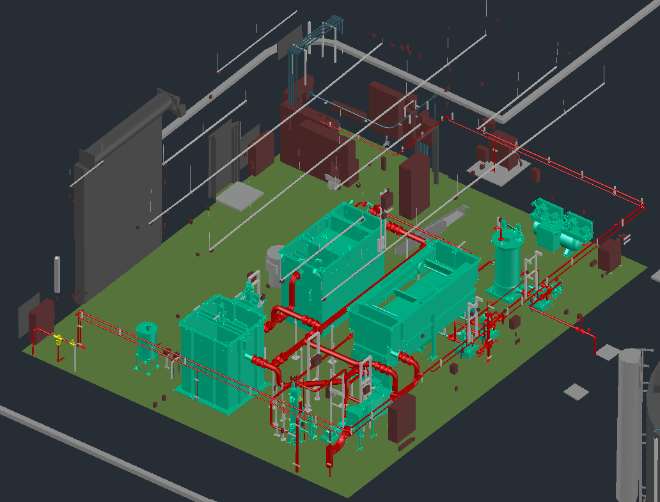
Here’s a real-world example from an industrial wastewater treatment plant that needed to modify piping associated with major processing equipment. A confined space combined with large diameter piping made the margin for error on this project extremely small. That’s where LiDAR scanning and 3D reverse engineering offer the advantage for creating a working 3D model.

Let’s start:

LiDAR Scanning

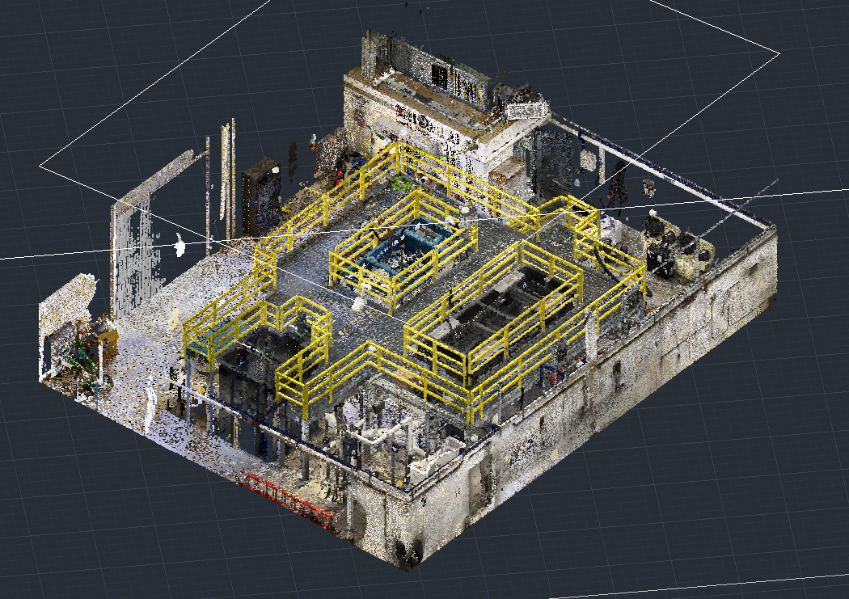
First, point cloud and panoramic photos were captured by LiDAR scanning at multiple locations with the objective of collecting a complete coverage of all assets from all angles.

The Registration Process

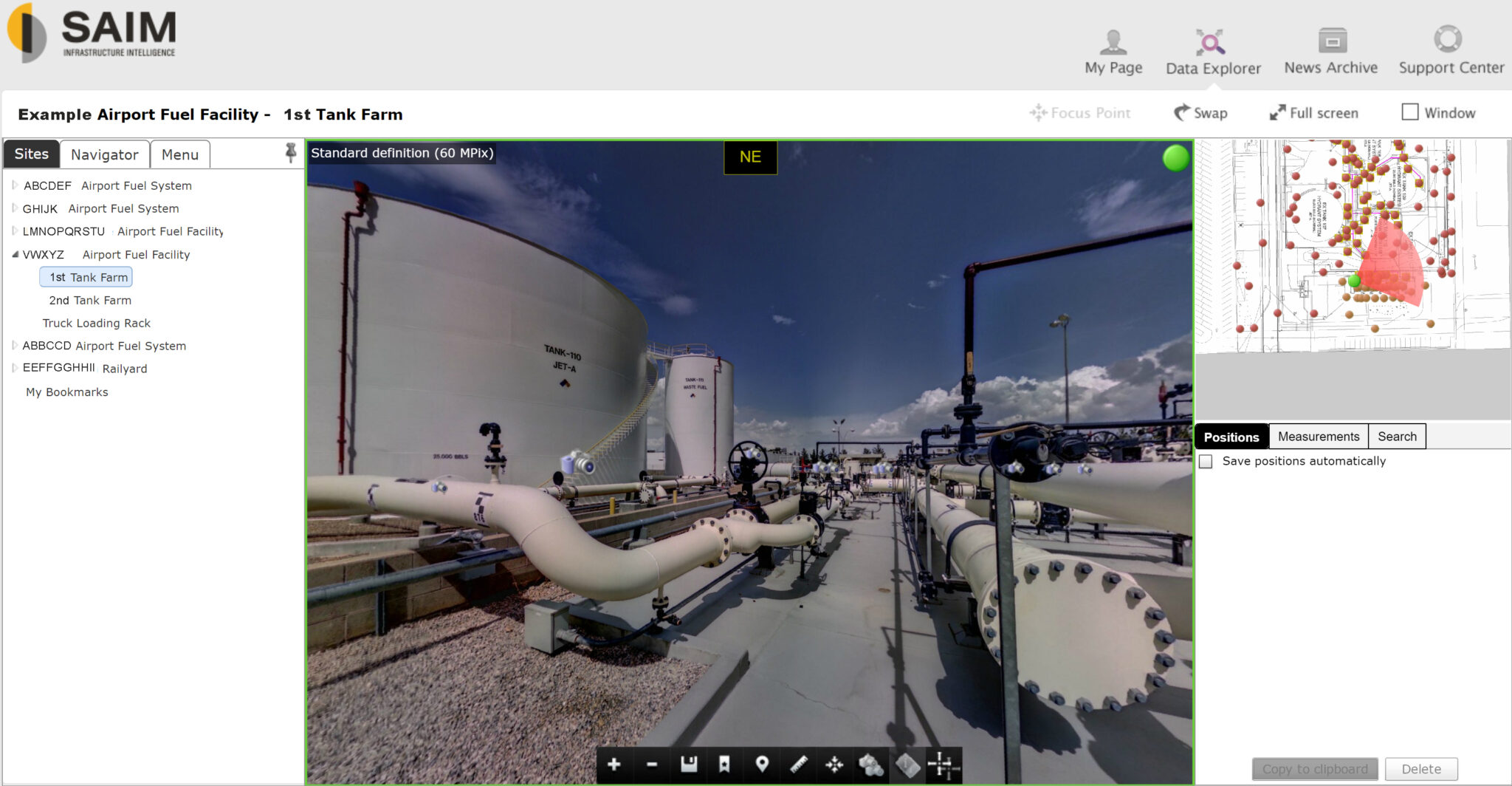
Next, using a network of surveyed targets, the LiDAR scan positions are combined into one unified point cloud; a process called registration. The registered point cloud can be exported to a variety of software programs for the engineering team’s design and analysis. The colorized panoramic photos, taken simultaneously at each scan position, are then stitched over the gray-scale point cloud data sets for an enhanced visualization. The cloud-based SAIM platform offers 24/7 access to the LiDAR scan and panoramic photos without needing installation of specialized software, having specific skills or powerful computers to run the point cloud. You can virtually navigate the model and visually verify items from anywhere in the world.

The LiDAR scan and panoramic photos provide accurate dimensions, coordinates and shapes for the assets and are great for communication purposes as well as tying a new design to existing assets. However, the point cloud does not offer any engineering attributes.

Creation of 3D Model

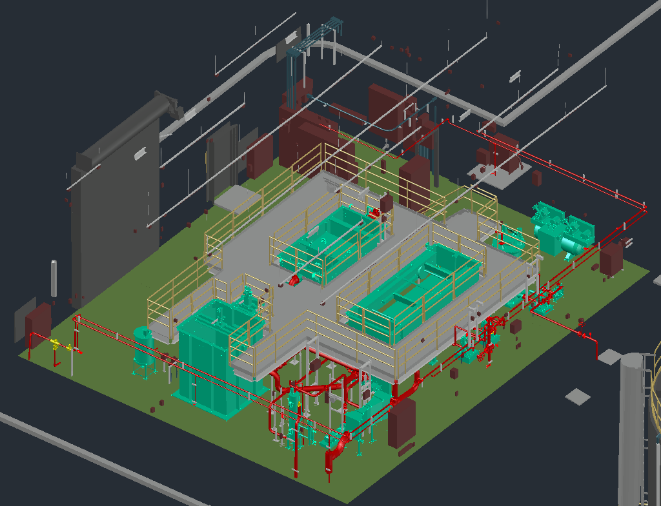
The final step is to create a 3D working model from the point cloud data. This 3D CAD model lets you remove features to get a clearer look at individual parts. In this example, the complete 3D model is on the left, and, on the right, is the same model with the handrail and platforms removed, allowing the relevant piping to be isolated from the surrounding infrastructure and investigated in further detail.

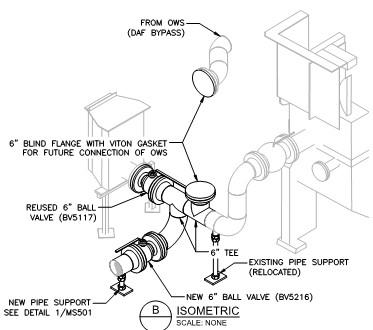
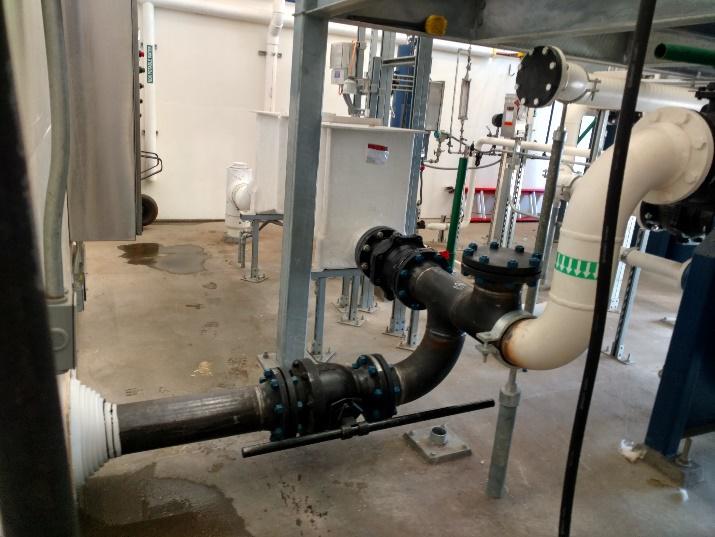
In addition to visual enhancements and flexibilities, a CAD 3D model provides detailed insights into engineering attributes of each component, such as piping and equipment specifications, ratings and ASTM material class. Having the 3D model at your fingertips, 2D engineering drawings such as Isometrics, orthographics and plant layouts can also be exported with one click of a button. Using the CAD model to build piping plans allowed the contractor to accurately plan the work and construct the piping in a small space with no changes required. On the left, you can see the design of the new components (dark color) superimposed on the as-built drawings of the existing assets (light color), and on the right, the completed field work that was constructed from these accurate drawings.

3D Model that Supports Project Planning, Budgeting and Much More…

Going forward, the 3D model can be used to modify or repair any part of the plant of facility, without making a site visit. This reduces the need, cost and risks of physical inspections and reduces response time in emergencies. These models support project planning and budgeting, improve accuracy of O&M manuals, and clearly communicate as-built conditions to significantly improve the design and construction processes. Utilizing digital engineering tools like these in the as-built process eliminates many sources of error in design and prevents liability and compliance issues that may arise in the future by having a dependable and defendable set of data surveyed at a “digital-level” of accuracy.

Take a Quick Survey to Determine Your Facility’s Digital Engineering Needs

Latest Articles

Snapshot: SAIM Intern Kolbe McLenon Explores Aviation Technology in Action

Meet Kolbe McLenon, SAIM’s Client Success Intern, and learn how his interest in aviation and technology is connecting with fuel operations.

SAIM Connect 2026: Five Years of Innovation, Training, and Collaboration

Connecting industry peers to share knowledge, learn, and optimize operational insight.
SAIM Connect 2026 logo

SAIM Expands Internationally with First Canadian Deployment at YVR

SAIM begins its Canadian expansion and delivers a single, trusted view of assets across Vancouver International Airport’s large-scale fueling operations.
SAIM team at YVR deployment

Showcasing SAIM’s Value: Inside the Transformation of SAIM.com

Learn more about our newly designed website.
SAIM Team Collaborating

SAIM Team Snapshot: Kyle O’Leary

Kyle O’Leary serves as Vice President of Revenue & Operations for SAIM, bringing more than 20 years of experience in aviation fuel systems, airline operations, and SaaS-based fuel management solutions.
Kyle O'Leary

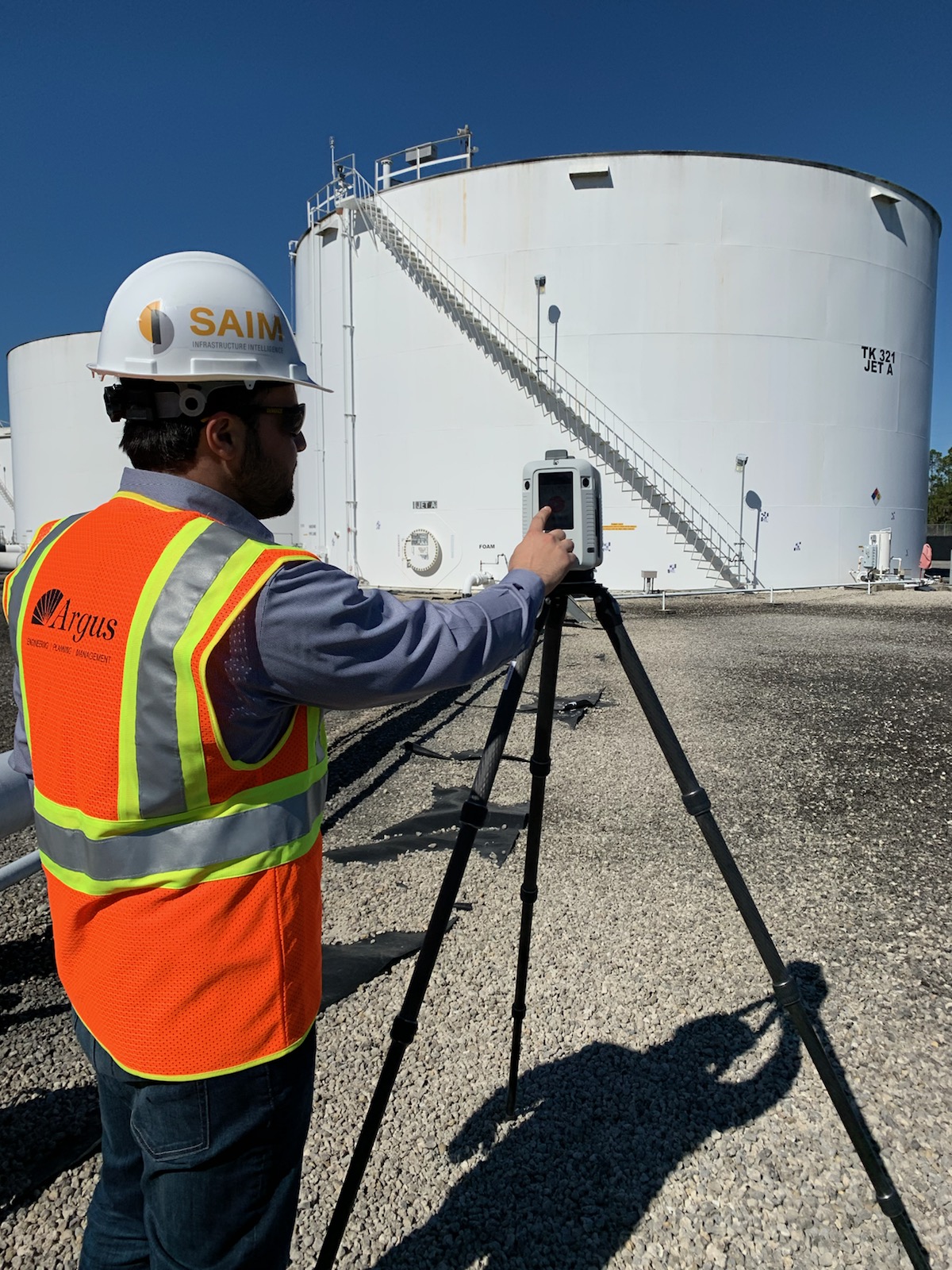
The field execution of LiDAR scanning is non-intrusive and won’t affect a facility’s normal operations.

Collecting facility data with the
non-intrusive LiDAR scanning survey.

LiDAR: Introduction to the Process

The first step is producing an accurate as-built geometric model by collecting point cloud data of the surfaces using LiDAR terrestrial and/or drone scanners in conjunction with the Total Station survey.

The scanner is placed at multiple locations throughout the facility and/or a drone flies above to collect geometrical point cloud data. A point cloud is a set of data points in space. Point clouds are datasets that measure many points on the external surfaces of objects around them. Simultaneously, 4K realistic high-dynamic-range (HDR) panoramic photos are collected at each scan position to be used for virtual walk throughs. Usually, full coverage point cloud data includes equipment, piping, ground, structures, buildings and miscellaneous components.

Next, the office work starts with a process called registration. Scans are combined into a unified cloud model of the facilities by tying the cloud points to the plant’s coordinate system. The cloud model is then imported into software for reverse engineering of the geometrical 3D model.

Whatever eyes can see, the LiDAR scan collects with ±2mm (0.08 in) dimensional accuracy. However, the LiDAR scanning data points are usually all above-ground geometries including, but not limited to:

  • all mechanical equipment (including top of tanks),
  • process & utility piping,
  • supports and structures,
  • civil components including the administration/operations building(s), pads, foundations, dikes, sumps, ramps, handrails,
  • major electrical equipment including generators, control panels, junction boxes, and
  • major instrumentation including control valves and flow meters.

What Does a Facility Look Like After a SAIM LiDAR Scan?

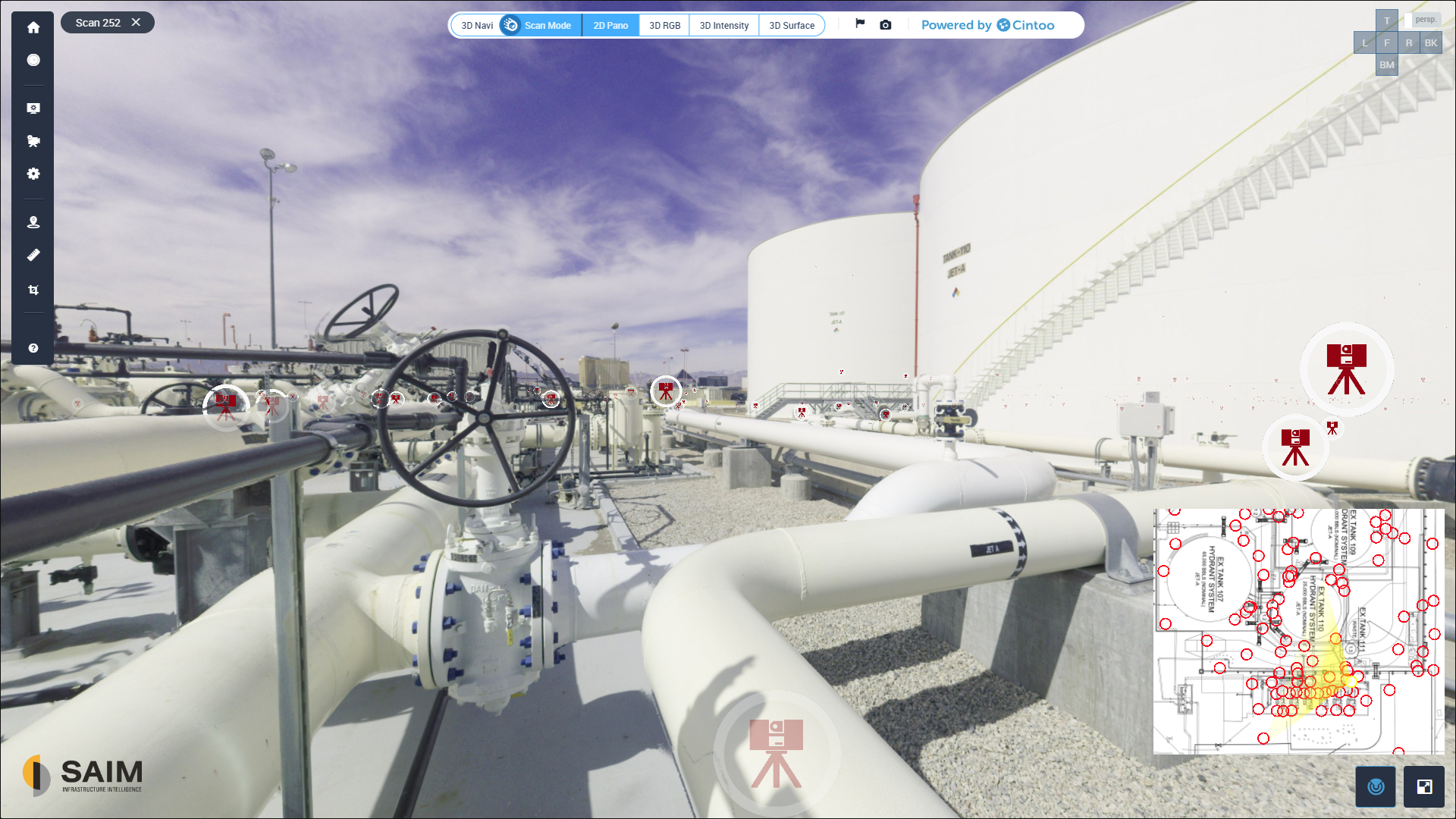
Below is a preview of a fuel facility’s scans hosted within the SAIM Platform. The red dots on the right of the screen show the many point cloud data sets that SAIM users can click through to view the facility from all available angles

Additional Benefits of LiDAR: Inspection, Construction and More

There are many benefits of LiDAR scanning in addition to producing accurate drawings of your facility that most likely was built before computers and may not have documentation of changes made due to new regulations, improved processes, and industry innovations. Collecting accurate geometrical data of your facility through LiDAR scanning also supports important inspection services:

  • API 653 tank out-of-roundness analysis,
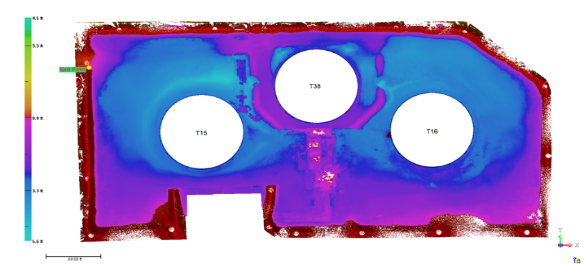
  • secondary containment dike volume analysis,
  • tank strapping,
  • ASME B31.3 pipe bulge/ deformation,
  • ASME Sec VIII Div. 1 & 2 pressure vessel integrity & Finite Element Analysis,
  • pipe fabrication and pipe fitting support, and
  • local deformation analysis.

LiDAR scans are also valuable for construction and fabrication industry support of the unique and large-scale structures that make up your fuel and pipeline systems. The accuracy of your scans greatly increases the efficiency and certainty of your project design and fabrication – reducing the possibility for expensive errors, delays, and operational malfunction when assembling your structural components during construction.

Spill point identified by secondary containment dike volume analysis.

The LiDAR scan process is a quick phase to complete, and gives your facility the first building blocks in place for a successful, powerful, and incredibly valuable digital transformation.

EXPLORE All Articles

Snapshot: SAIM Intern Kolbe McLenon Explores Aviation Technology in Action

Meet Kolbe McLenon, SAIM’s Client Success Intern, and learn how his interest in aviation and technology is connecting with fuel operations.
Read More

SAIM Connect 2026: Five Years of Innovation, Training, and Collaboration

Connecting industry peers to share knowledge, learn, and optimize operational insight.
Read More

SAIM Expands Internationally with First Canadian Deployment at YVR

SAIM begins its Canadian expansion and delivers a single, trusted view of assets across Vancouver International Airport’s large-scale fueling operations.
Read More

Showcasing SAIM’s Value: Inside the Transformation of SAIM.com

Learn more about our newly designed website.
Read More

SAIM Team Snapshot: Kyle O’Leary

Kyle O’Leary serves as Vice President of Revenue & Operations for SAIM, bringing more than 20 years of experience in aviation fuel systems, airline operations, and SaaS-based fuel management solutions.
Read More

SAIM Team Snapshot: Sergio Cedano

Sergio is a Help Desk, Training, and Documentation Specialist for SAIM.
Read More

Page 1 of 7

At SAIM, innovation doesn’t stop at our platform. It extends to how we show up digitally. Our newly redesigned website, SAIM.com, represents a significant step forward in how we communicate our value and serve both existing and prospective customers. 

SAIM Team Collaborating

A Digital Platform That Reflects Our Innovation and Value  

The redesign was driven by a clear goal: evolve our message and expand the digital footprint of the SAIM platform. As infrastructure intelligence continues to play a critical role across transportation, defense, industrial and AEC sectors, we recognized the need for a website experience that clearly articulates our capabilitiesmodular solutions and technical depth

Built Around the Customer Journey 

The new SAIM.com delivers a more intuitive, best-in-class digital experience built around user needs. We refined the site architecture to ensure logical content flow and seamless navigation, creating a smooth and satisfying customer journey from first visit to conversion. Visitors can now more easily explore our core value propositions, understand our use cases and see how the SAIM platform adapts to diverse operational environments. 

Industry-Specific Pathways for Decision-Makers 

We also placed greater emphasis on clearly communicating our unique selling points and strategic industry partnerships. Dedicated industry pathways help key decision-makers quickly access relevant information tailored to their sector or job role, whether they are evaluating infrastructure monitoring solutions for complex transportation networks or mission-critical defense applications. 

Turning Engagement into Action 

Beyond improved usability, the redesigned website is a strategic lead generation engine. Compelling content, streamlined calls to action and enhanced technical storytelling, including self-guided demos, work together to move visitors from interest to engagement. 

This launch marks an important milestone for SAIM. Our platform continues to advance, and now our digital presence reflects the same level of precision, intelligence and performance that our customers expect from us every day.