
From your perspective, what makes the collaboration between SAIM, Argus, and the airline consortiums so valuable to the aviation fueling industry?

The collaboration is especially valuable because it brings together aligned stakeholders across fuel operations, data, and industry coordination. This alignment helps strengthen consistency and transparency in aviation fueling practices while supporting better decision-making across organizations.

Thomas Drakeley, Fuel Strategy at United Airlines and a member of SAIM’s advisory committee, reflects on how shared insights, modern platforms, and cross‑consortium collaboration are helping operators make smarter, safer, and more strategic fueling decisions.

As someone who works closely with fuel infrastructure and strategy, where have you seen SAIM make the biggest impact for airline operators and owners?

When it comes to impact, I’ve seen SAIM make a meaningful difference for operators and consortiums by improving visibility into fuel infrastructure and day-to-day operations. This enhanced clarity supports more efficient planning and enables more informed strategic decisions. I look forward to building on from the data in the system to make even more impactful decisions.

As SAIM continues to grow and evolve, what excites you most about the platform’s potential over the next several years?  

What stands out most is how it creates a structured channel for industry voices to actively influence the platform’s evolution. That collaborative input is exciting, particularly given its potential to drive continued innovation and scalability over the coming years. Being able to see the health of our fuel facilities even when we are not on site helps our teams drive toward the same common goals. 

Can you share an example of how collaboration among consortiums has helped improve operations, safety, compliance, or decision-making?

In terms of cross-consortium collaboration, I’ve seen real value when shared learnings help teams refine operational processes, strengthen safety culture, improve compliance alignment, and ultimately make faster, more confident decisions. The SAIM Connect conference was a great event to hear these cross-collaboration stories. Hearing SFO’s Nicole Stewart share her experiences helped drive change at the cities I chair.

Your career has included roles in both military and commercial aviation operations. What lessons from those experiences do you believe will be most important as the industry prepares for the next generation of fueling infrastructure and asset management? 

Drawing from experience across both military and commercial aviation environments, one consistent lesson is the importance of combining disciplined processes with adaptability, especially as the industry continues moving toward more advanced fueling infrastructure and increasingly data-driven asset management systems. When I first entered the fuel space, all processes were manual and written on paper. The streamlining SAIM provides will allow future generations more success.
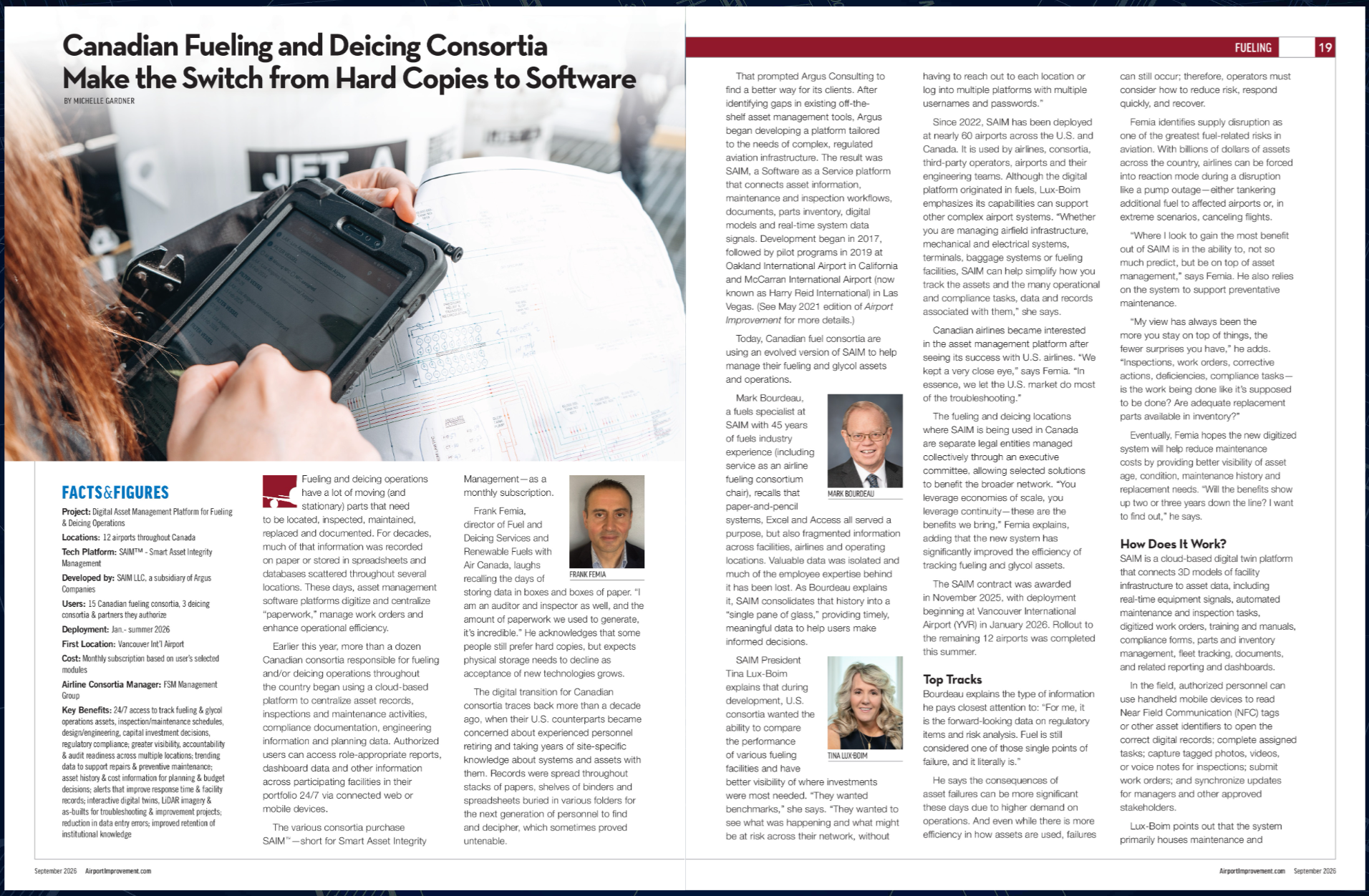
SAIM’s growing role in modernizing aviation infrastructure is featured in the September issue of Airport Improvement Magazine. The article, “Canadian Fueling and Deicing Consortia Make the Switch from Hard Copies to Software,” explores how fueling and deicing consortia across Canada are moving away from paper records and disconnected systems to gain greater visibility into the assets and operations that keep aircraft moving.

Spread of Airport Improvement Magazine September 2026 Issue

This transition is powered by SAIM’s Smart Asset Integrity Management platform, which centralizes asset records, inspections and maintenance activities, compliance documentation, engineering information, and planning data into one connected system. The Canadian rollout began at Vancouver International Airport (YVR) in January 2026 before expanding to 12 additional airports throughout the country.

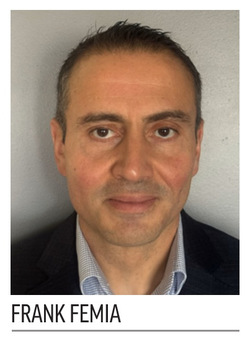
For Air Canada’s Frank Femia, Director of Fuel and Deicing Services and Renewable Fuels, the transition marks a significant shift away from the paper-heavy processes traditionally used to manage complex aviation infrastructure.

“I am an auditor and inspector as well, and the amount of paperwork we used to generate, it’s incredible.” Femia told Airport Improvement Magazine

From Disconnected Information to Greater Visibility

The feature traces SAIM’s roots back to a challenge familiar throughout aviation: critical information scattered across paper records, spreadsheets, and individual facilities, coupled with the risk of losing institutional knowledge as experienced personnel retire. SAIM was developed to address those gaps by bringing critical asset and operational information together in one place.

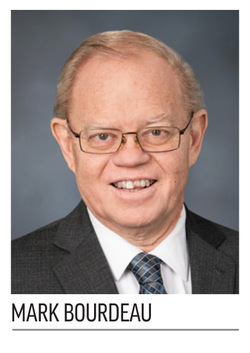
Mark Bourdeau, Fuels Specialist at SAIM, describes the result as a “single pane of glass” that transforms fragmented information into timely, meaningful data that operators can use for decision-making.

“Effective maintenance and capital planning start with knowing what assets you have, where they are, and what condition they are in. Without an accurate asset inventory and history, it is difficult to plan maintenance, anticipate replacement needs, or make meaningful financial decisions.” – Mark Bourdeau, Fuel Specialist, SAIM

Built With Aviation, For Aviation

SAIM’s aviation roots have shaped the platform from the beginning.

“It is true asset integrity management with a 360-degree view of your assets. SAIM grew out of Argus Consulting’s more than 30 years of experience designing and supporting aviation fuel infrastructure.” – Tina Lux-Boim, SAIM President

Today, that industry foundation helps connect the people, assets, tasks, and data critical to airport operations.

Read the full feature in the September issue of Airport Improvement Magazine to learn more about the digital transformation underway across Canadian fueling and deicing operations.

What are you most excited to learn about during your internship?

I’m excited to learn more about the behind-the-scenes processes that help keep air travel running safely and efficiently.

This summer, SAIM is excited to welcome Kolbe McLenon as our Client Success Intern. With a strong interest in aviation, technology, and working with people, Kolbe is getting hands-on experience with the behind-the-scenes systems, teams, and processes that help keep aviation fuel infrastructure and air travel operating safely and efficiently.

Tell us a little about yourself, including what you’re studying and where you’re attending school. 

I’m currently studying aerospace engineering at Wichita State University and plan to graduate in spring 2028. I’ve always been interested in aviation and enjoy learning how engineering and technology come together to solve real-world challenges. 

What attracted you to the opportunity to intern with SAIM? 

I come from a family of salespeople — both my father and grandfather worked in sales — which first sparked my interest in the internship opportunity. I’ve also had a longtime interest in the aviation industry. When Evan Tinker introduced me to the Client Success internship at SAIM, I was immediately excited because it combined my interests in aviation, technology, and working with people. 

Is there a particular feature or innovation from SAIM that has stood out to you so far? 

One innovation that has especially stood out to me is the SAIM Digital Platform’s ability to remotely monitor fuel infrastructure, tank levels, and facility data in real time. Seeing how technology can improve visibility and operational efficiency has been really impressive. 

What do you enjoy most about working in a technology-focused environment? 

I enjoy being exposed to new innovations and seeing how technology is applied in real operational environments. Many of my classes focus heavily on the math and science behind engineering concepts, so it’s been interesting to also see the practical applications and impact these technologies can have. 

If you could describe your internship experience thus far in three words, what would they be? 

Riveting, Electric, Fulfilling. 

Outside of work and school, what are some hobbies or interests you enjoy? 

Outside of work and school, I play club volleyball at Wichita State University, primarily indoor volleyball with some beach volleyball as well. I play both outside hitter and right-side hitter. 

What is one fun or interesting fact about yourself? 

 I’ll usually choose the off-brand version over the name brand when it comes to snacks — especially white cheddar Cheez-Its. 

Jump to Photo Gallery ↓ 

Bringing the Industry Together

SAIM Connect 2026 marked the fifth annual SAIM user conference. The event brought together aviation fuel operators, facility and operations managers, airline representatives, engineers, and industry partners from across the country for three days of collaboration, operational discussions, hands-on learning, and peer networking in Orlando, Florida.

Created to help organizations maximize the value of the SAIM platform and learn directly from one another, SAIM Connect has grown into a collaborative annual forum focused on operational excellence, connected fuel infrastructure, digital asset management, and the evolving future of fuel facility operations.

Since launching in Las Vegas in 2022, the conference has continued to bring users together in cities across the country, including Chicago, Kansas City, Atlanta, and this year’s event in Orlando.

Training, Operational Discussions, and Platform Insights

The conference combines practical training, operational best-practice discussions, customer-led insights, and direct access to SAIM subject matter experts to help teams strengthen visibility into their operations and continue moving from adoption to optimization.

This year’s conference featured SAIM fundamentals refresher courses, operational breakout discussions, roadmap updates, customer panels, reporting and operational intelligence sessions, Digital Twin and As-Built discussions, parts and inventory workflows, and open forums focused on the future of the SAIM platform and connected aviation fuel operations.

Throughout the week, attendees explored topics including operational visibility, implementation strategies, maintenance and inspection workflows, reporting and dashboards, data-driven decision-making, operational consistency, and maximizing utilization across fuel operations.

Sessions focused not only on how organizations are using SAIM today, but also on how teams can continue customizing and evolving their use of the platform to support long-term operational goals.

Learning from Industry Peers

One of the most valuable aspects of SAIM Connect continues to be the opportunity for users and industry peers to learn directly from one another.

Through open discussions, panels, training sessions, and collaborative conversations, attendees shared real-world operational experiences, lessons learned, challenges, and ideas that continue helping shape both the SAIM platform and the broader operational community surrounding it.

Beyond the Classroom Sessions

In addition to educational sessions and operational discussions, attendees also enjoyed sunny Orlando with:

  • an opening night cocktail reception under the palm trees
  • a behind-the-scenes tour of the MCO airport fuel facility
  • friendly competition at Andretti Indoor Karting and Games during our SAIM Grand Prix

These shared experiences helped strengthen relationships and create opportunities for conversation and connection outside the classroom sessions.

Special thanks to our sponsors, Liquid Controls and Pepperl+Fuchs, for helping support this year’s event.

Thank You for Joining Us

Thank you to everyone who attended SAIM Connect 2026 and contributed to the conversations, collaboration, and shared knowledge that made this year’s event such a success.

We appreciate the continued partnership and look forward to supporting our users throughout the year as they continue optimizing and evolving their operations with SAIM.

In case you missed it or want to relive the memories, view our event gallery below.

SAIM has officially begun its international expansion with its first Canadian deployment at Vancouver International Airport (YVR). This milestone marks an important step as SAIM prepares to support fuel facility operations at 11 airports across Canada by June, extending its platform beyond the United States and into a growing international footprint.

YVR represents a powerful first example of SAIM’s capabilities at scale. The airport’s fuel operations team manages a vast, complex environment that requires visibility across thousands of assets and multiple operational areas. With SAIM, YVR operations now has visibility into everything from critical fueling infrastructure in the tank farm to everyday operational equipment — down to lab equipment and smoke alarms — creating a single, trusted source of asset data to support inspections, preventative maintenance planning, and day-to-day operational decision-making.

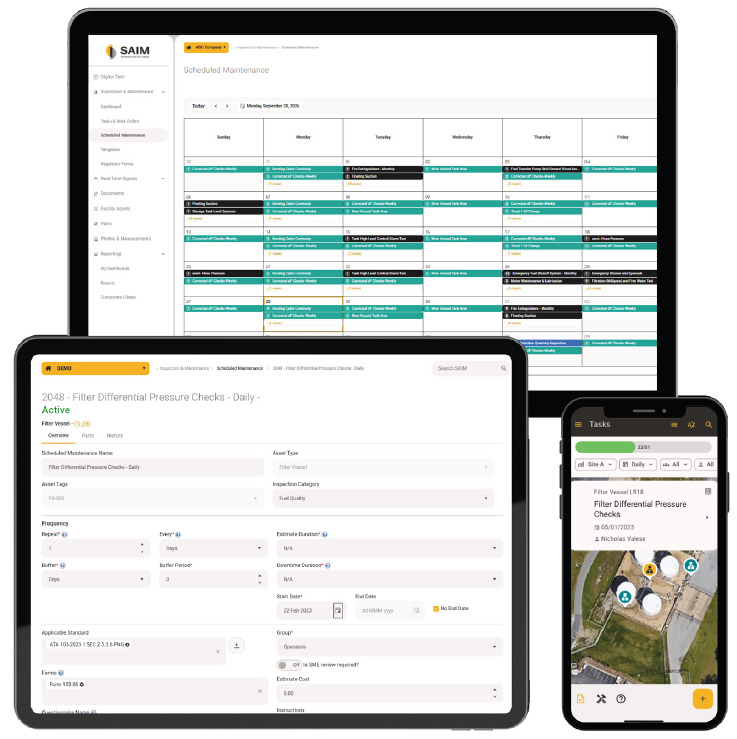
Through SAIM’s Maintenance capabilities, teams can manage regulatory inspections, plan and document preventative maintenance, track work orders and associated costs, and maintain a complete history for each asset in one place — helping ensure consistency, accountability, and long-term asset performance.

After transitioning from a competitor system that was never fully adopted, the fuel operations group selected SAIM for its hands‑on implementation, training, and ongoing support to improve adoption across teams and shifts. As one team member shared during onboarding, “It almost seems too good to be true, but if you can deliver everything you have shown us in this training, it changes everything.”

SAIM is built to deliver on that expectation. Through close collaboration, ongoing customer success resources, and continuous platform development, our team works alongside operators to ensure the system delivers meaningful, lasting value in real-world operations.

The successful YVR deployment sets the stage for additional Canadian aviation fueling infrastructure rollouts and continued global expansion, supporting a broader shift toward more connected, data-driven system operations.